Articles, News and Reviews

Website Marketing

Discover why choosing a web designer who understands marketing is key to building a website that attracts traffic, leads, and lasting growth.

Read More »
Google Business Profile

Google Business Profile

Google Business Profile Web Design Why you need a Google Business Profile   A Google Business Profile (GBP) is a free business listing from Google. It allows you to provide details and photos of your business, including your location, website address, services and products. Creating this free profile is a great way to increase your visibility across Google services. Information from your GBP may appear in Google Search, Google Maps, and Google Shopping and is an integral part of search engine optimisation and web design. GBP is only available to businesses that have contact with customers. This includes businesses with a physical location (like a restaurant or store) and businesses that provide services by meeting with clients in other locations (like consultants or plumbers). What are the benefits? Get discovered in Google (and Google Maps). Whether you’re looking for foot traffic or web traffic, Google is the ultimate search referrer. A GBP helps ensure that people find your business when looking for products and services in their local area. Your GBP listing shows searchers where and how to visit your business. It also improves your local SEO. A listing for a local business is more likely to appear when people search for a nearby business using Google Maps. Control your online business information. Your GBP allows you to control and update your contact information, business hours, and other essential details as needed. Keep your details updated. You can post updates to share that you’ve expanded your services, temporarily closed, or fully reopened (an especially useful feature during emergencies like COVID-19). Your GBP adds to your local SEO and the information you share will probably rank above third-party sites that might have out-of-date details. Build trust through reviews. Reviews are a key element of social proof and a meaningful way to build trust and credibility for your brand, particularly within your local area. Google’s star rating and space for detailed reviews allow customers to share as much or as little information about their experience with your business as they like. All of this helps potential customers decide which businesses to visit and what products to buy. How to maximise your Profile. Complete all elements of your profile. Customers are 3 times more likely to consider your business reputable if you have a complete Google Business Profile. They’re also 70% more likely to visit your website. Google specifically states that “businesses with complete and accurate information are easier to match with the right searches”. This improves your score for relevance and helps you rank higher. The key here is to tell Google visitors “what you do, where you are, and when they can visit”. If your business hours change around holidays or seasons, make sure to keep them up to date. Verify your business and its location. Verified business locations are “more likely to show in local search results across Google products, like Maps and Search.” Including a verified location also helps improve your score for the distance ranking factor. Add real images and videos of your business. Your GBP includes a logo and cover photo. Use images consistent with those on your social profiles to make it easier for people to recognize your brand. But don’t stop there. Add images and videos to showcase your location, work environment, and team. If you run a restaurant, post pictures of your meals, menus, and dining room. Make sure they look appetising, and professional, and aren’t low-res. According to Google, businesses with photos receive more requests for directions and more clicks through to their websites. Share This Post <lidata-term-id=”42″> Online Marketing <lidata-term-id=”39″> Web Design Redhill <lidata-term-id=”40″> Web Design Reigate <lidata-term-id=”37″> Web Development <lidata-term-id=”36″> Website Design

Read More »
Redhill Web Design - SEO - PPC

On-Line Marketing Strategies

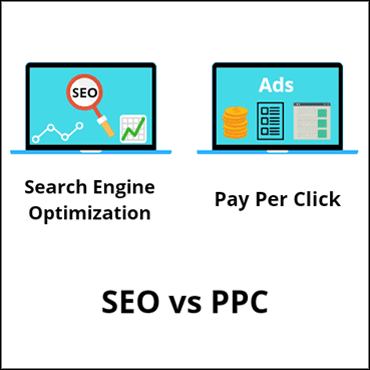
On-Line Marketing Strategies S.E.O or P.P.C – Which One Is Right for You? There are two major search engine marketing strategies in use today: SEO (search engine optimisation) and PPC (pay-per-click). Both strategies are entirely different, and it is tough to decide which one or which combination is right for you. To decide which strategy is best for you, consider the basics. It is easier to judge the pros and cons when taking the big picture into account. People will continue to battle for the top search engine positions. Search engine marketing is undoubtedly one of the best sources of targeted traffic. As people continuously try to find new and unique ways to get additional traffic to their websites, the SEO industry continues to grow. PPC refers to advertising on a search engine that charges on a per-click basis whenever a visitor clicks on one of your ads. The order of ads is usually based on bidding prices, meaning that the advertiser who bids the highest price per click will be listed first. These sponsored listings are known as PPC listings. SEO tries to change your search engine ranking by looking at several factors including link popularity, Page Rank and so on. If your website is search engine optimised, then obviously you are more likely to have a good ranking in the search engines. A well-optimised and marketed site will be listed in the top results whenever a person searches for related keywords. One of the best benefits of SEO marketing is you don’t have to pay for any clicks! So, how can we decide which method is better? Both methods serve different purposes. However, one is likely to be a better fit for your business than the other one. Pay Per Click PPC traffic, rankings and results tend to be more stable and predictable than SEO, and, combined with its low cost, this makes PPC one of the more popular ways of advertising. Most companies try PPC before they try SEO because it’s seen as more stable. In many cases PPC lets you rank well on the search engines, without having to do the tedious work involved in SEO – no finding link partners, posting links, creating content and so on. If you have the budget for it, the ranking is yours. Another advantage is that the listing will get posted when you want it and not when the search engine gets around to it. With PPC’s popularity growing day by day, the market is also getting competitive. You will find that CPCs (costs per click) are steadily rising, and for a common man, it is getting tough to invest much. As with most auctions, the more people bidding on PPC, the higher the prices get. S.E.O The main benefit of SEO is that it does not cost per click. The disadvantages are that the traffic to your website is more unpredictable and requires a lot of work. With SEO, you must adapt and constantly change strategies as search engines change their algorithms. SEO is also slower than PPC, as many search engines don’t list new sites. So, what should you choose? Well, it depends on how much money you are willing to spend, what your timeline is, and what your return on investment is. If you have cash then PPC should be your first choice, as it produces fast results. PPC can also be used for testing the effectiveness of websites. If you have time and money to invest in long-term results, SEO is an excellent option as well. All and all, the best marketing strategy is typically to go with PPC in the short term to get immediate traffic and analyse conversions. SEO should then be taken with a long-term view in mind, so you can reap the benefits of free traffic later. Whichever strategy you choose NetService Web Design can produce a marketing plan best suited to your needs, both short-term and in to the future. Share This Post <lidata-term-id=”42″> Online Marketing <lidata-term-id=”39″> Web Design Redhill <lidata-term-id=”40″> Web Design Reigate <lidata-term-id=”37″> Web Development <lidata-term-id=”36″> Website Design

Read More »